Food on Pinterest: Content that performs and ideas you can try
1 augustus 2026
Food on Pinterest doesn’t just look good—it can influence what people cook next and add to their shopping lists. In one survey, 81% of people said that they use Pinterest weekly to discover food ideas.¹
If you create in this space, it may help to know what shows up again and again in food content with strong engagement and how you might use those patterns in your own Pins.
Recent internal analysis of high-engagement food content surfaced five key ways creators tend to make those Pins. You can use them as inspiration and try the approaches that fit your style in your next Pins.
1. Start with themes that people already love
Saves and clicks can point to different kinds of intent.
For saves, people often collect functional content that they want to come back to later, especially around special diets and meal planning.
For clicks, more specific dishes like soups, meat recipes and vegetable recipes tend to drive stronger outbound traffic. Those clicks often signal “I want to make this now” as people go to the full recipe.
Seasonal recipes stood out, too. In this study, food Pins with a clear seasonal theme (such as festive desserts or summer salads) drove about twice as many saves as clicks, as people saved them early and then came back when they were ready to cook.²
What to try: If you want more saves, you might want to lean into seasonal moments, weekly meal planning and specific dietary needs. If you want more clicks, test Pins that highlight a clear, individual dish.
2. Match your format to your goal
People interact with formats in different ways, so line up what you post with what you want.
Short videos under 15 seconds tended to drive the strongest click performance.
Longer videos in the 1–2 minute range more often performed well for saves, as people collected step-by-step demos to revisit while cooking.
If you share a full recipe on your own site, using recipe rich Pins was associated with higher click rates in this analysis. Recipe rich Pins saw about a 26% higher click rate than standard Pins because they automatically sync details such as ingredients and cook time from your site, so people know there’s a full recipe when they tap through.
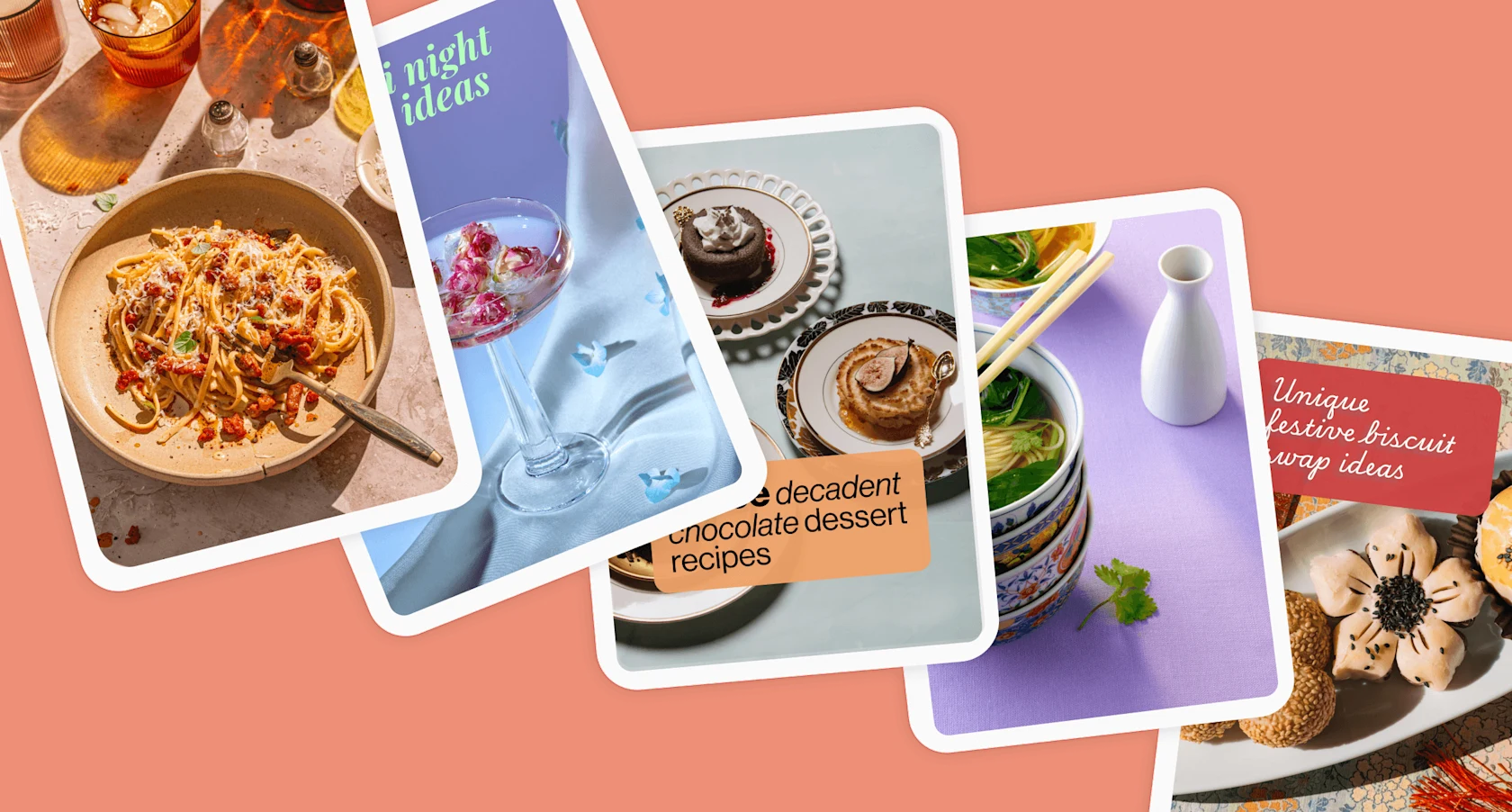
Collage-style Pins often showed up in high-engagement content too, especially when they used multiple images to show different steps or angles of the final dish. About 45% of top traffic-driving Pins used more than one image in this way.²
What to try: Pick a goal for each Pin. If you want people to click out, test short, punchy videos plus recipe rich Pins. If you want them to save for later, try demos that are 1–2 minutes in length or multi-image Pins that walk through the key steps.
3. Focus on short, helpful text
Text overlays can work well on food Pins when they support the image instead of competing with it.
In this study, clearly naming the dish in a small, readable text overlay often lined up with higher click rates. Many top Pins also paired a short headline with a brief line of subtext to add just enough extra detail—such as ‘one-pot’, ‘30 minutes’ or ‘freezer-friendly’.
What to try: Use text to answer ‘What is this?’ and, if needed, ‘Why this one?’ in just a few words. Skip full recipes in the image text and keep anything longer in your description or on your site.
4. Show how it’s made
In high-save Pins, process-led content showed up often. Many high-engagement videos walked through the cooking process rather than just the finished plate, often with hands in frame or part of the creator on screen.
We also saw a strong lean towards home production, suggesting that everyday, at-home content can feel especially relevant here.
What to try: When you want saves, don’t be afraid to slow down and show the steps. Film in your actual kitchen, include your hands as you cook, and walk people through the process that they’ll follow later.
5. Keep the food front and centre (especially in photos)
For image Pins with strong click performance, a few styles came up again and again.
Medium and tight crops helped to highlight texture and detail. About 36% of top traffic-driving Pins used a medium crop and 30% used a tight, close-up crop where only part of the food was visible.
A 45-degree angle was also popular. Around 69% of top traffic-driving Pins were shot from about this angle, giving people a clear view of the dish, plating and layers in a way that feels inviting.
Most top Pins focused on one hero dish, without too many extra elements competing for attention. In this study, 96% of top-performing Pins didn’t show a person, and 84% only showed the finished food.
About 45% used simple, relevant props such as ingredients, utensils or linens to support the story without crossing into clutter.
For video, you can be more flexible about what’s in frame, especially when you’re showing a process. For photos, letting the dish be the star was common among Pins with higher engagement in this analysis.
What to try: For image Pins, fill the frame with the dish, shoot at around a 45-degree angle and use just a few simple props. Save portraits and personality shots for formats where you’re telling more of your story.
Experiment with your approach
A few simple best practices may also support discovery: design for mobile with vertical formats, use relevant keywords in your titles and descriptions, and keep your profile curated and up to date.
From there, pick one of these moves, test it in your next few food Pins and watch how your saves and clicks respond.